Why Loyalty Beats Discounts When Every Pound Counts

Aimee Blackman
When footfall slows or costs rise, the instinctive reaction for many small businesses is to discount.
Lower prices feel like action.
They feel visible.
They feel fair.
But discounts come with a quiet downside: they train customers to wait, not return.
Over time, businesses that rely on constant price cuts often find they’re working harder for thinner margins — without building anything lasting in the process.
Loyalty works differently.
Instead of asking “How cheap can I go?”, it asks a more sustainable question:
“How do I reward the people who already choose me?”
Discounts attract attention. Loyalty builds habits.
A discount is a one-off event.
A loyalty reward is part of an ongoing relationship.
Customers who collect points, progress through tiers, or unlock occasional rewards aren’t just saving money — they’re engaging with your business over time. That sense of progress matters, especially when budgets are tight on both sides of the counter.
Importantly, loyalty doesn’t have to mean giving everything away.
Small, controlled rewards — a free item after several visits, bonus points during quieter periods, or access to occasional offers — can feel generous without cutting deeply into margins.
Why loyalty feels more personal in small businesses
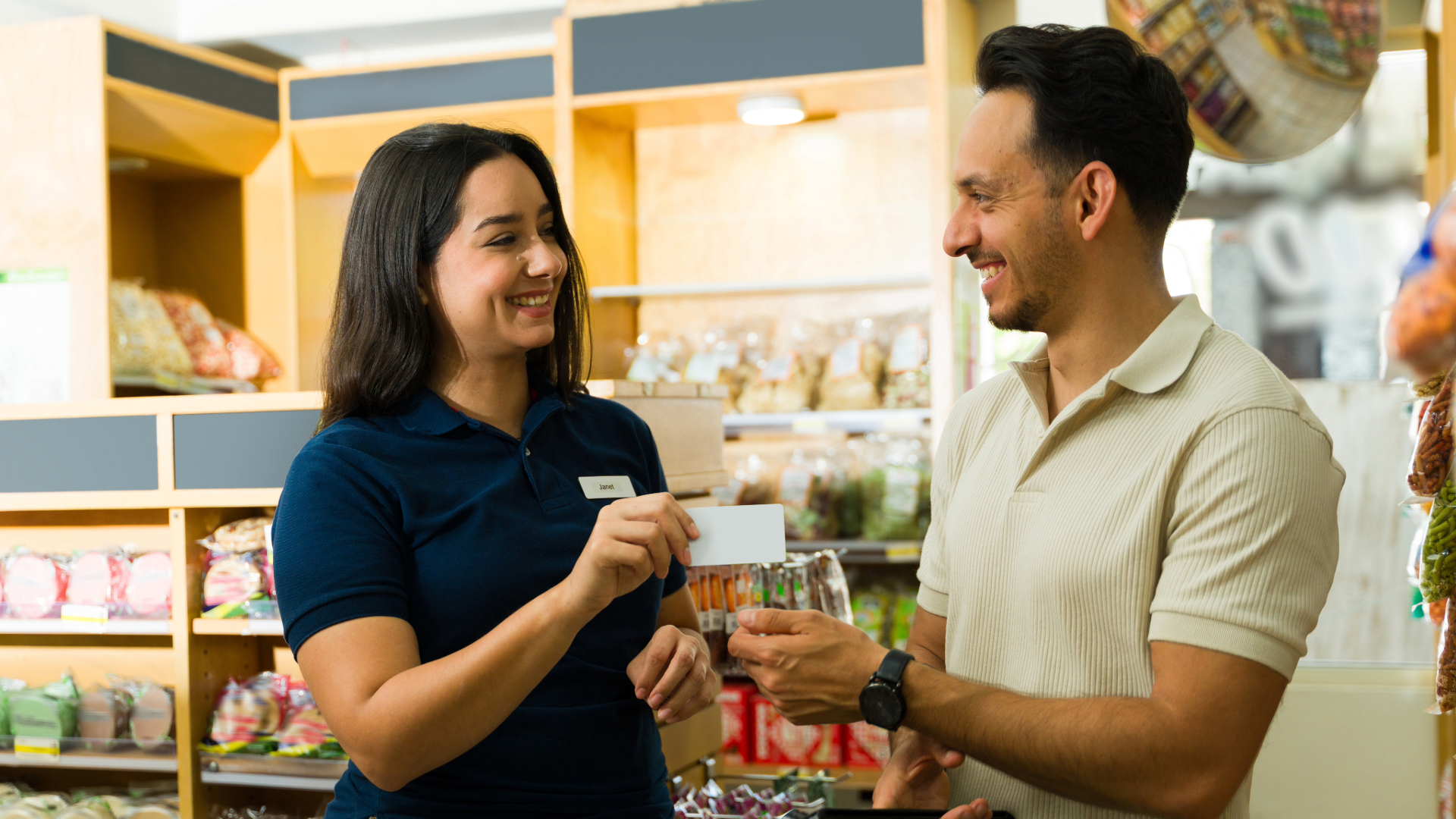
Large chains run loyalty schemes at scale, but small businesses have an advantage they don’t: familiarity.
You recognise faces.
Customers recognise you.
That makes loyalty feel less transactional and more human.
A well-designed loyalty scheme supports that relationship quietly in the background. It tracks repeat behaviour, rewards consistency, and removes the awkwardness of remembering who’s earned what.
The best loyalty systems don’t shout.
They simply say, “We noticed you came back.”
Loyalty without pressure
One of the biggest misconceptions about loyalty is that it needs to be complicated.
In reality, the most effective schemes are often:
- Simple to join
- Clear about rewards
- Easy to forget about once they’re running
When customers can register quickly, earn automatically, and redeem without friction, loyalty becomes part of the experience — not an extra decision.
And for the business, it becomes a way to protect margins while still giving something back.
In uncertain trading conditions, that balance matters.